
The San Francisco Arts Commission (SFAC) Main Gallery is presents Dream Jungle, a dialogue with the novel by Jessica Hagedorn. This group exhibition curated by Matthew Villar Miranda, features new commissions and key loans by Alexa Burrell a.k.a. LEXAGON, adrian clutario, Al-An deSouza, Astria Suparak, and Carlos Villa, along with archival holdings from The Center for the Study of the Study of the Tasaday and the Jessica Hagedorn Papers at The Bancroft Library. Together the exhibition features artists who wield elements of performance to explore counter-ethnographies of the tropics, subverting colonial notions of the other.
Taking its title from Jessica Hagedorn’s 2003 novel, the exhibition explores the tangle of truth and artifice behind imperial representation. In the novel, Hagedorn stages two performances in the Philippine jungle: the media spectacle of a fabricated “Stone Age” tribe and the filming of a Hollywood Vietnam War epic. Drawing from this framework, Dream Jungle foregrounds the tropics as a zone of psychic and historical projection—where the colonized land and body are scripted, cast, and costumed for imperial consumption.
Through installation, video, literature, and archival assemblage, the artists enact what Miranda calls “tropical counter-ethnographies": practices that seize the tropes of scripting, scoring, costuming, drag, fabrication, fore- and backgrounding, character building, scene-setting, and tableau to unsettle colonial modes of capture. Each artist stages a different facet of the (de)construction of performance:
ARCHIVE – Grounding the exhibition are selections from the Jessica Hagedorn Papers, housed at The Bancroft Library at the University of California, Berkeley. These materials span from 1974 to 2006 and include drafts of Hagedorn’s novels and plays, public relations materials, notes, and correspondence. Hagedorn—widely respected as a postcolonial author—explores power and identity in Philippine society and among Filipinx American immigrants, merging poetry, fiction, music, and performance art to interrogate the cultural afterlives of imperialism. These archives underscore the literary and historical layers that shape Dream Jungle’s curatorial frame.
This section also includes selections from The Center for the Study of the Study of the Tasaday, a vast and growing meta-archive founded by artist Stephanie Syjuco. The project catalogs scholarly documentation, media coverage, and visual materials surrounding the Tasaday—the so-called “Stone Age” tribe “discovered” in the Philippines in 1971—and the controversies that followed. The Center complicates the act of archiving itself and questions who gets to narrate history.
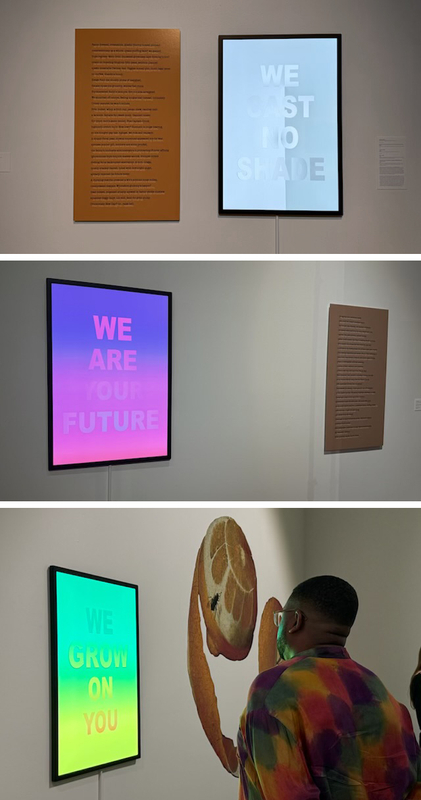
NARRATIVE – Al-An deSouza’s decades-long career across academia, fiction, and multimedia art with works that parody colonial depictions of the tropics, such as Joseph Conrad’s novel Heart of Darkness (1899) and primitivizing paintings by European modernists Paul Gauguin and Henri Rousseau. Their photographic abstractions and text-based works translate these tropes into critiques of representation. deSouza's 2020 book Ark of Martyrs rewrites Conrad’s book, drawing on gospel and rap vocal traditions, setting the narrative to expose the unspeakable desires and political resentments embedded in imperial scripts. This satirical intervention is accompanied by examples from a new series called Public Address, which appropriates alluring advertising language to articulate diasporic ambiguity and refusal.
“Dream Jungle pays homage to Jessica Hagedorn’s daring vision and celebrates artists who continue to wield performance and the imagined tropics as a lush, dallying, and biting evasion of colonial capture,” said exhibition curator Matthew Villar Miranda. “Through staged selves and reanimated mythologies, these artists grow our humid notions of our shifting world. They gesture, cast spells, and prod the ever-evolving notions of identity, history, and place. In a time where the discernment between reality and illusion, authenticity and deep fakes, technology and primitivity, is increasingly wrought, porous, and overgrown, the exhibition and its artists offer performance beyond illusory spectacle; instead, they insist on its truths as a necessary and fecund mode of freedom, insurgence, and revelrous self-discovery.”