
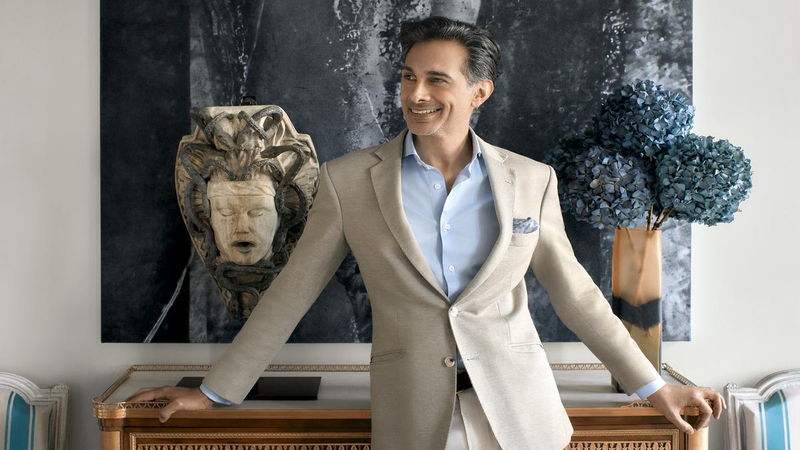
As India returns to the Venice Biennale for the third time starting May 9, 2026, its Pavilion signals a new chapter of collaboration and confidence. Led by the Ministry of Culture in partnership with the Nita Mukesh Ambani Cultural Centre and the Serendipity Arts Foundation, the presentation moves beyond static displays to embrace performance, poetry, and literature. Curated by Dr. Amin Jaffer, the exhibition reflects on the idea of “home” through fragile, organic materials and introspective narratives—positioning India’s civilisational continuity within a contemporary, global conversation.
Dr. Jaffer gives more details to Robb Report India in an exclusive conversation.
Robb Report India (RRI): The Ministry of Culture, Government of India is working with Nita Mukesh Ambani Cultural Centre and Serendipity Arts Foundation. What are some of the highlights of this public-private partnership?
Dr. Amin Jaffer (Dr. AJ): This marks the third time India is participating at the Venice Biennale, and it remains a Government of India initiative, led by the Ministry of Culture. What makes this edition particularly significant is the full and active involvement of the Ministry, alongside two strong partners, Nita Mukesh Ambani Cultural Centre (NMACC) and Serendipity Arts Foundation.
Within the context of the Venice Biennale, it is normal for national pavilions to depend on sponsorship, support and the expertise of private foundations or semi-public institutions. Having two partners brings different know-how and capabilities.
The pavilion goes beyond static art projects; it also encompasses performance, poetry and literature—areas in which Serendipity Arts Foundation has long-standing expertise.\
RRI: Tell us about the Pavilion of India at this year’s Venice Biennale.
Dr. AJ: The Pavilion of India will present five art projects by artists who represent the country's length and breadth. Each artist works with different materials. Alwar Balasubramaniam (Bala) works with terracotta and soil; Sumakshi Singh with thread and embroidery; Ranjani Shettar with papier-mâché; Asim Waqif with bamboo; and Skarma Sonam Tashi also with paper and papier-mâché. Yet, they are united by the idea of ‘home’.
Visitors to the pavilion will experience this theme expressed through land, architecture, and nature. The exhibition invites reflection on the physical components of home, while also addressing change as an aspect of continuity.
Visitors will get a sense of India’s civilisational continuity. Here, materials and certain forms of expression will be intimately connected to Indian culture.
RRI: How did you curate the India Pavilion for this year?
Dr. AJ: Following an open invitation by the Ministry of Culture, I was invited, along with many others, to submit a proposal and make a presentation. We were asked to include multiple artists and to develop a strong overarching concept.
The theme for the Venice Biennale this year was 'in minor keys'. For me, minor keys speak to nostalgia and to the act of looking inward.
‘Minor’ is also expressed through materials that are fragile and organic. They’re not indestructible, not metal, never overtly technological, never complex in production. They are worked by hand; they speak to humanity and to nature.
The theme of introspection led me to the idea of ‘home’. When you travel in India today, you see change everywhere. We are developing and growing economically year on year. We are also experiencing a demographic boom. Accompanying this is profound change. While we welcome this shift, embracing new technologies and ways of being, we also reflect on what was once there, what has disappeared and what may have been lost. This echoes the theme ‘in minor keys’.
It also reflects the fact that Indians, wherever they may be in the world, retain a very strong sense of home.
RRI: How is Indian art doing on the global stage today?
Dr. AJ: India is more present than ever in the global art scenario. At Venice alone, aside from the India Pavilion, the Kiran Nadar Museum of Art is doing a major collateral project for artist Nalini Malani. Photographer Dayanita Singh is undertaking a major project with the State Archives of Venice. Beyond that, Indian artists are included in the main International Pavilion, too.
In September, 30 Indian artists and artisans are represented at a major conference exhibition called Homo Faber.
The Victoria and Albert Museum (V&A) is redoing its South Asian galleries, focussing on the Indian subcontinent and our civilisation; the British Museum has just had a milestone Indian show; and the Musée Guimet in Paris is preparing for a major India year.
This all reflects a growing recognition of India as one of humankind’s great visual cultures, with a unique artistic vocabulary—its own aesthetics, materiality and symbolism.
RRI: How will Indian art unfold in the future?
Dr. AJ: What feels especially promising right now is the significant cultural and artistic revival led by Indian government today. The Yuge Yugeen Bharat Museum [set to open its first gallery by late 2026] is, finally, a museum dedicated to Indian civilisation. The participation in the Venice Biennale also shows the extent to which the government is committed to representing India on the international stage.
But beyond that, what’s happening within the country itself is equally exciting—new museums, new cultural initiatives, public-private partnerships.
View More at Robb Report India